Start here: choose manual involvement, V8 character, AWD touring or plug-in daily use. Then compare the exact generation and budget for the actual car’s fitted hardware. Horsepower is only one part of the decision.
Choose the experience before the badge
The best performance station wagon is the one whose driving character, space and ownership demands fit your life. A manual CTS-V, a rear-drive AMG, a plug-in Volvo and an RS 6 solve different problems. This guide is a U.S.-oriented shortlist of representative factory configurations, not a reliability league table or a list of cars currently for sale. A separate section orders selected factory horsepower figures, not overall performance.
I want three pedals and a V8
Start with the CTS-V Wagon. Its factory manual is the defining distinction; inspect the clutch and gearbox and verify that the actual car is a manual.
I want long-distance pace and AWD
Compare an AWD E63 AMG wagon with the RS 6. Choose the generation first, then assess ride quality, fitted brakes, tires and service history.
I can charge at home
Compare the V60 Polestar Engineered and M5 Touring as different-sized plug-in propositions. Charging access and ordinary daily use matter alongside peak output.
I want V8 character, not the newest technology
Consider the Magnum SRT8 or a rear-drive E63. Condition, corrosion and restoration of worn chassis parts may matter more than additional power.
If your real priority is a comfortable, responsive wagon rather than maximum acceleration, include the ordinary CTS 3.6. It belongs in the discussion as an alternative—not as a CTS-V equivalent. Use the comparison index to check the exact model-year configuration, fuel economy and documented space before narrowing the field.
Highest horsepower wagons in this shortlist
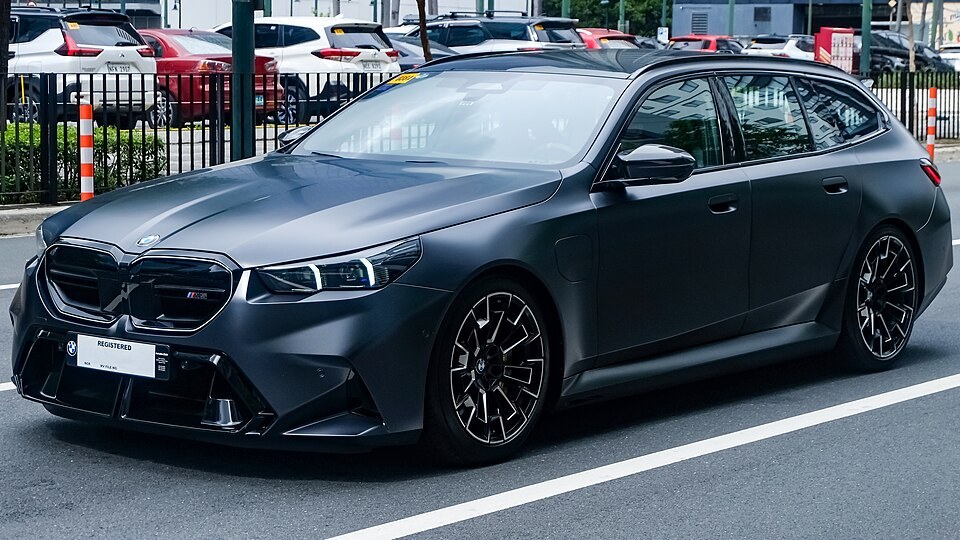
The 2025 BMW M5 Touring has the highest manufacturer-advertised output in this guide’s reference selection: 717 hp for its combined hybrid system. The 2026 Audi RS 6 Avant performance follows here at 621 hp from its V8, and the 2020 Mercedes-AMG E63 S Wagon at 603 hp. These are exact U.S. reference configurations, not a claim to cover every wagon worldwide.
On a small screen, scroll the table sideways to see the rating basis and source.
| Exact reference | Advertised output | What the figure measures | Manufacturer source |
|---|---|---|---|
| 2025 BMW M5 Touring | 717 hp | Combined V8 and electric-motor system; plug-in hybrid | BMW USA launch specifications |
| 2026 Audi RS 6 Avant performance | 621 hp | 4.0-liter twin-turbo V8 rating; not a plug-in-system figure | Audi USA model specifications |
| 2020 Mercedes-AMG E63 S Wagon | 603 hp | 4.0-liter twin-turbo V8 engine rating | Mercedes-Benz USA technical specifications |
Keep the output basis attached to the number. BMW separately lists a 577-hp engine and a motor contribution of up to 194 hp, but specifies 717 hp—not their arithmetic sum—as the combined maximum. Use the published system rating. Do not substitute metric PS, modified-car claims or wheel-dyno readings for these U.S. manufacturer figures.
The three source pages above were reviewed for this section on September 24, 2026. Factory output is not a measurement of a particular used car. Tires, mass, gearing and usable power delivery are separate buying questions; the largest horsepower number is not automatically the most suitable wagon.
Performance wagon specifications: compare like with like
These are manufacturer-published U.S. specifications for the model years shown. They are reference configurations, not a claim that every generation or listing has the same output. Each row links its underlying manufacturer page or archived manufacturer brochure.
| Exact reference | Why consider it | Engine / system | Output | Drive / transmission |
|---|---|---|---|---|
| 2014 Cadillac CTS-V Wagon | Manual V8 involvement | 6.2L supercharged V8 | 556 hp / 551 lb-ft | RWD; 6-speed manual or 6-speed automatic |
| 2008 Dodge Magnum SRT8 | Naturally aspirated V8 character | 6.1L naturally aspirated V8 | 425 hp / 420 lb-ft | RWD; 5-speed automatic |
| 2013 Mercedes-Benz E63 AMG Wagon | Rear-drive AMG touring | 5.5L twin-turbo V8 | 518 hp standard; 550 hp with Performance Package | RWD; 7-speed MCT |
| 2014 Mercedes-Benz E63 AMG S-Model Wagon | AWD V8 all-rounder | 5.5L twin-turbo V8 | 577 hp / 590 lb-ft | 4MATIC AWD; 7-speed MCT |
| 2020 Mercedes-AMG E63 S Wagon | Later-generation AMG touring | 4.0L twin-turbo V8 | 603 hp / 627 lb-ft | Variable 4MATIC+ AWD; 9-speed MCT |
| 2020 Volvo V60 T8 Polestar Engineered | Plug-in daily-driver alternative | 2.0L turbocharged + supercharged four, electric assistance | 415 hp / 494 lb-ft combined | e-AWD (hybrid AWD); 8-speed automatic |
| 2025 BMW M5 Touring | Modern high-output plug-in | 4.4L twin-turbo V8, electric assistance | 717 hp / 738 lb-ft combined | M xDrive AWD; 8-speed automatic |
| 2026 Audi RS 6 Avant performance | Non-plug-in contemporary flagship | 4.0L twin-turbo V8 | 621 hp / 627 lb-ft | quattro AWD; 8-speed Tiptronic |
| 2011 Cadillac CTS Sport Wagon 3.6 | Lower-intensity sporting alternative | 3.6L naturally aspirated V6 | 304 hp / 273 lb-ft | RWD or AWD; 6-speed automatic |
U.S. horsepower is not the same unit as metric PS. Plug-in figures are combined system ratings; do not add independently quoted engine and motor peaks. We omit cross-source acceleration rankings because weather, tires, test procedure, rollout and battery state can change the result. A brochure figure is not a test of a used car.
CTS-V, Magnum SRT8 and the ordinary CTS: three different propositions
Cadillac CTS-V Wagon: choose it for the manual option
The factory six-speed manual makes this a distinctive choice for someone who wants a performance wagon built around driver involvement. The automatic is a valid alternative, but it changes the experience and the inspection brief. Cadillac’s 2014 V brochure documents the supercharged V8, Magnetic Ride Control and Brembo brakes; those systems belong in the ownership budget. Cadillac CTS-V factory brochure.
Ask a specialist to assess clutch engagement, gear selection under normal load, differential noises, cooling performance and electronic damping. Obtain an itemized modification history. A smaller supercharger pulley or an ECU tune requires a different evidence trail from a stock car: who calibrated it, what fuel it needs, and whether the supporting work was completed.
Dodge Magnum SRT8: naturally aspirated V8 character
The SRT8 is the 6.1-liter performance variant, not simply any Magnum with a HEMI badge. The factory package pairs rear-wheel drive with an automatic transmission and performance brake hardware. Confirm the VIN and installed equipment rather than relying on wheels or exterior trim. Dodge’s 2008 manufacturer brochure.
For this older platform, prioritize underbody condition, steering and suspension wear, brake measurements and consistent transmission behavior. A very low odometer reading is not proof that rubber parts, fluids or tires are fresh. The right example should make sense as a whole car, not just an engine specification.
Cadillac CTS 3.6 Sport Wagon: a sporting alternative, not a V
The ordinary 3.6 wagon uses a naturally aspirated V6. The 2011 U.S. brochure specifies an automatic for the wagon, with rear- or all-wheel drive; a manual specification elsewhere in the CTS range does not establish a manual wagon. Cadillac’s 2011 CTS brochure.
Consider it when the longroof shape and road manners matter more than the V’s powertrain. Check the actual suspension, wheel and drivetrain specification, and inspect service history, oil condition, cold-start behavior and stored diagnostic faults. Do not budget on the assumption that a lower purchase price means every age-related repair will be inexpensive.
E63 AMG wagons: generation and drivetrain come first
“E63 wagon” is not one interchangeable specification. Even within the S212 generation, the distinction between a rear-drive car and a later all-wheel-drive S-Model is substantial.
- 2013 U.S. E63 AMG Wagon: rear-wheel drive, a twin-turbo V8 and two advertised output levels depending on the Performance Package. Verify the option evidence before quoting the higher figure. 2013 E-Class brochure.
- 2014 U.S. E63 AMG S-Model Wagon: the manufacturer documents 4MATIC with a 33:67 front/rear torque split and higher output. That is not the same system as later-generation 4MATIC+. 2014 E-Class brochure.
Start the inspection with the exact engine, transmission and chassis specification. Request a cold start, a full-system diagnostic scan and a specialist road test. Assess cooling-system condition, oil or coolant residue, smooth transmission operation and fitted suspension behavior. For a self-leveling rear suspension, check whether the vehicle maintains an even parked height and whether the compressor runs unusually often.
These are inspection prompts, not a finding that every AMG suffers a particular defect. A documented, well-maintained example and a poorly evidenced one should not share an ownership-cost assumption just because the badge matches. Earlier E55s and later E63s can also make compelling choices, but use their own factory documentation rather than transplanting the figures in this table.
Later S213 reference: 2020 E63 S Wagon
The 2020 U.S. wagon moves to a 4.0-liter twin-turbo V8, nine-speed MCT and variable 4MATIC+ AWD, with the 603-hp rating shown in the table. Its air-suspension and available brake configurations need their own inspection and cost assessment; do not treat it as the same hardware as the earlier S212. 2020 E-Class manufacturer specifications, PDF page 28.
RS 6 and M5 Touring: decide whether plugging in suits you
Audi RS 6 Avant performance
Audi’s 2026 U.S. page describes a twin-turbo V8, eight-speed Tiptronic, adaptive air suspension and a rear sport differential. It is the contemporary choice here for a buyer who wants the high-output wagon experience without a plug-in charging routine. The “performance” variant’s quoted output must not be assigned automatically to an earlier RS 6. Audi USA: 2026 RS 6 Avant performance.
Assess wheel condition, tire specification, brake type, suspension operation and service documentation. If the car has aftermarket wheels or spacers, verify dimensions, load ratings, fasteners, clearance and tire compatibility. Expensive-looking modifications are not evidence that their installation is correct.
BMW M5 Touring
The 2025 G99 introduced the M5 Touring to the U.S. market with a plug-in V8/electric powertrain. Its combined output is a system rating, and its everyday appeal depends on more than that number. BMW USA launch specifications.
Decide whether you can charge reliably where you live or work. During an inspection, demonstrate charging, check the cable and included equipment, scan the hybrid system and inspect the battery enclosure and underbody for damage. Confirm the car’s warranty and service coverage directly by VIN; do not assume that every advertisement’s warranty statement transfers to your purchase.
For either car, drive the actual wheel-and-tire combination on the kind of broken pavement you use every day. Check the turning and parking space at home, rear-seat access and the cargo floor with your own equipment. The highest-output choice can still be the wrong daily wagon if those basics do not work.
V60 Polestar Engineered: read the model year carefully
The 2020 V60 T8 Polestar Engineered combines a turbocharged and supercharged four-cylinder with electric assistance. Its factory equipment includes Öhlins dampers and substantial front brakes. Treat it as a distinct plug-in performance approach, not as a smaller V8 wagon. Volvo’s 2020 V60 U.S. brochure.
Later cars can have different battery, motor and engine arrangements. Do not use the 2020 output in the table as a specification for every V60 wearing the same badge. Establish the exact model year and powertrain, then look up the matching EPA record. Gasoline MPG and electricity-assisted MPGe answer different questions; neither guarantees the result of your commute.
Ask for a demonstration of AC charging, electric and hybrid operation, cabin heating/cooling and brake transitions. Have a qualified inspector assess the high-voltage system and underbody without opening or probing high-voltage components yourself. Check damper condition and settings, tire wear and the correct replacement brake specification. Home charging, service access and comfort on your usual roads are the deciding factors—not simply the promise of both economy and speed.
Budget for the fitted hardware, not just the asking price
A useful first-year comparison starts with actual quotations for the individual cars on your shortlist. Advertised price alone hides the distinction between a serviced car and one approaching several expensive consumables at once.
| Budget line | Evidence to request | Why it changes the choice |
|---|---|---|
| Tires and wheels | Correct sizes, age, remaining tread, damage, and a fitted replacement quote | Large or staggered sizes can narrow your tire choices; modifications add fitment questions. |
| Brakes | Identify iron or carbon-ceramic equipment; obtain a suitable condition report and parts/labor estimate | A generic brake quote is not useful if it prices the wrong system. |
| Suspension | Check fitted adaptive, air or specialist dampers and price any diagnosed work | A comfortable test drive does not establish every electronic or leveling function is healthy. |
| Scheduled service | VIN-specific schedule, invoices and work due by age as well as mileage | Oil changes alone are not a complete drivetrain service history. |
| Energy and insurance | Your annual mileage, required fuel, electricity access and insurer’s quote | A plug-in without routine charging has a different use case; insurance varies by buyer. |
| Contingency | Written PPI findings and your tolerance for downtime | A general reserve should not substitute for pricing an already identified problem. |
We do not publish one universal maintenance-cost number: labor rates, fitted options, service history and condition vary too much for an unsupported figure to be useful. Keep the purchase price, immediate remedial work and ongoing operating costs separate, then compare the totals on the same basis.
A performance-wagon inspection brief
- Identify the exact car. Match the VIN, trim, drivetrain and options to documents. Separate factory equipment, cosmetic changes and engine calibration changes.
- Establish history. Request service invoices and mileage chronology. Ask about collision repairs, water entry, track use and previous tuning without assuming that an unanswered question is a pass.
- Use the right specialist. Agree a cold start, lift inspection, diagnostic scan and road test appropriate to the vehicle. For plug-ins, include charging and hybrid-system checks by qualified personnel.
- Measure expensive consumables. Ask for written findings on the actual brakes, tires, wheels and suspension, including any limits of the inspection.
- Check the wagon body. Cycle the liftgate and rear glass where fitted; inspect the cargo floor, roof lining and seals for moisture. Confirm that the cargo cover, load restraints and folding-seat hardware are present and functional.
- Check recalls separately. Run the VIN through NHTSA and ask the manufacturer to confirm completed campaigns. A recall lookup is not a comprehensive mechanical history or a clean bill of health.
- Price unresolved items before deciding. Obtain written repair estimates and resolve material identity, structural, title or inspection gaps before committing.
The FTC recommends an independent inspection even when a used car is described as inspected or certified. FTC used-car guidance. For campaign information and lookup limitations, use NHTSA’s recall resource. Our complete buying guide expands the title, seller, inspection and transaction workflow.
How Waghoon chooses and maintains this guide
Our selection balances driving involvement, powertrain variety, practical use and a distinct reason to choose each configuration. It is deliberately not a complete catalog. Manufacturer documents support factory specifications; the buying recommendations are Waghoon’s editorial judgment, not a laboratory comparison or a reliability study.
Archived brochures remain manufacturer-authored documents, even when hosted by a brochure archive. Their model years are stated beside the specifications. Current manufacturer pages are dated reference points, not a promise of dealer inventory. We do not turn seller modifications into factory claims, infer safety ratings from another body style, or convert missing evidence into zero cost or zero risk.
This page is evergreen research. Its collection links lead to separately dated vehicle profiles. Individual Waghoon profiles carry separate seller sources and availability-check dates. A research update does not reverify those listings. Read our editorial policy or send a correction with a supporting source.

Performance wagon buying questions
What is the best performance station wagon for a manual-transmission buyer?
The factory-manual Cadillac CTS-V Wagon is the clearest starting point in this U.S.-focused selection. Verify that the individual car is a manual; the CTS-V was also offered with an automatic. Condition and modification history still decide whether a specific example is a good buy.
Is a Cadillac CTS 3.6 wagon the same as a CTS-V Wagon?
No. The ordinary CTS 3.6 uses a naturally aspirated V6; the CTS-V uses a supercharged V8 and different performance hardware. The 2011 U.S. CTS brochure specifies an automatic for the ordinary wagon. A manual CTS sedan does not establish a manual 3.6 wagon.
Are all E63 AMG wagons all-wheel drive?
No. The 2013 U.S. E63 AMG Wagon in this guide is rear-wheel drive; the 2014 U.S. S-Model wagon uses 4MATIC. Generation, model year and market must be verified before applying a drivetrain specification.
Which performance wagon is cheapest to maintain?
This guide does not claim a universal winner. Compare written inspection findings, fitted brake and suspension equipment, service history, consumables, insurance and local labor costs for actual cars. A low asking price can coexist with substantial immediate work.
Should I choose a plug-in performance wagon if I cannot charge at home?
First establish whether reliable charging elsewhere fits your routine. Compare the exact car’s gasoline-operation MPG separately from its electricity-assisted ratings and account for charging time and cost. Peak system output alone does not establish a plug-in’s value for your use.
Why are there no current prices or fastest-to-slowest rankings?
This is a durable buying framework, not a live valuation tool or a controlled road test. Used prices depend on condition, options and location, while acceleration results vary with test conditions. Dated seller prices belong on individual listing profiles.
Turn the guide into a shortlist
Compare configurations, fuel economy and documented spaceUse the complete station-wagon buying checklistRead how performance estates became part of wagon historyBrowse dated Waghoon profiles and their original seller linksMake the specification work for you.
Compare the factory configuration, then evaluate the seller’s exact car and service history.