
Estate car body style = station wagon in U.S. terminology. Cambridge’s Learner’s Dictionary labels estate car as the U.K. term and gives station wagon as the U.S. equivalent. For shopping purposes, think of a passenger-car body with the cargo area extending behind the rear seats and accessed from the rear.
Scope: practical English-language body-style terminology for car research. This is not a legal classification rule, and it does not force every hatchback, crossover or boundary-case vehicle into one category.
What defines an estate car body style?
The useful distinction is the body layout. An estate keeps the passenger cabin and rear cargo area under one extended roofline. The cargo area sits behind the rear seats and is reached through a rear hatch or tailgate.
On a small screen, scroll the table sideways to read all columns.
| Cue | What it tells you | What it does not prove |
|---|---|---|
| Roof continues over the load area | The rear cargo compartment is part of the passenger-car body rather than a separate trunk. | A universal minimum roof length; no single visual cutoff works for every boundary case. |
| Rear hatch or tailgate | Bulky items can be loaded directly into the cargo area behind the rear seats. | That the car must be an estate: hatchbacks and crossovers also use rear hatches. |
| Car-based seating and proportions | The vehicle is intended to combine passenger-car use with additional cargo flexibility. | AWD, seating capacity, ground clearance, luxury equipment or performance. |
Is an estate car the same as a station wagon?
Generally, yes. “Estate car” is standard British usage; “station wagon” is the American equivalent. That is why the same vehicle may be called an estate in a U.K. review and a wagon in a U.S. listing.
The naming translation is the easy part. The harder part is making sure two sources describe the same model year, market and configuration. Engines, drivetrains, trim and cargo measurements can change even when the body name does not.
For the full terminology map—including longroof, Audi Avant, BMW Touring and Jaguar Sportbrake—read estate car vs. station wagon.
Estate vs. sedan, hatchback and crossover
| Body style | Rear cargo layout | Practical shopping clue |
|---|---|---|
| Estate / station wagon | Cargo area is inside the passenger-car body behind the rear seats; rear hatch/tailgate access. | Look for the extended roof and verify actual opening and load-floor dimensions. |
| Sedan / saloon | Separate enclosed trunk behind the passenger compartment. | Useful if you value a physically separated trunk; opening size can matter for bulky cargo. |
| Hatchback | Rear hatch opens into the cabin-side cargo area. | A hatch alone does not make a wagon; compare the exact model’s body proportions and cargo measurements. |
| Crossover / SUV | Rear hatch and integrated cargo area are common. | Body height, ground clearance and platform differ by model; do not infer them from the hatch. |
Need the trunk-vs-wagon comparison specifically? See estate car vs. sedan.
Examples of estate-car naming
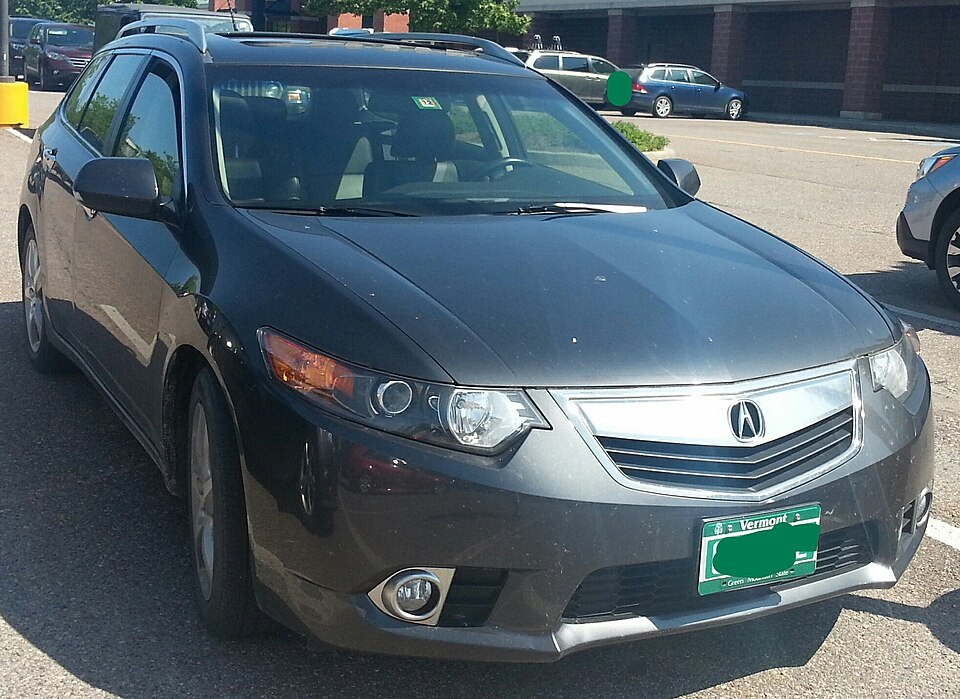
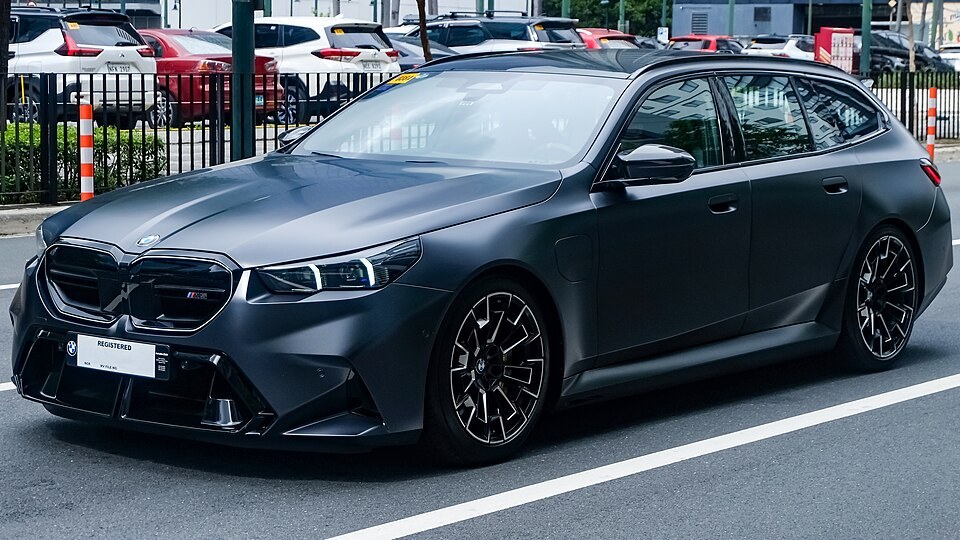
Other manufacturer names can include Audi Avant, Jaguar Sportbrake and Volkswagen SportWagen. Those labels help identify the body, but the complete badge is still required to understand the engine and performance level.
How to search for an estate car in the U.S.
Search both the regional body term and the model-specific name. A useful pattern is year + model + wagon/estate/manufacturer badge + requirement. For example: “2019 Golf SportWagen manual,” “A4 Avant wagon,” or “BMW 3 Series Touring AWD.”
Then verify the exact car rather than relying on the label: VIN, model year, market, transmission, drivetrain, seller status and the cargo measurement that matters to you.
If cargo fit is the objective, use Waghoon’s cargo measurement worksheet. A body-style name cannot tell you whether a specific crate, stroller or bicycle clears the opening.
Estate car body-style questions
What do Americans call an estate car?
Americans generally call it a station wagon. “Estate car” is the British term.
Does estate mean a luxury car?
No. “Estate” describes the body style in British English, not the price, trim level or luxury status.
Does an estate car always have all-wheel drive?
No. Front-, rear- and all-wheel-drive estates exist. Check the exact configuration.
Is every car with a rear hatch an estate?
No. Hatchbacks, crossovers and SUVs also use rear hatches. Use the full body layout and the model’s own documentation rather than a single visual cue.
Sources and editorial method
This is a terminology and shopping guide. Dictionary definitions establish the regional terms; Waghoon’s body-layout explanation is an editorial browsing framework, not a regulatory definition. We do not claim that one dimension separates every wagon from every hatchback or crossover.
- Cambridge Learner’s Dictionary: estate car — U.K. term with “US station wagon” equivalence.
- Cambridge Dictionary: station wagon — U.S. body-style term.
- Cambridge Learner’s Dictionary: sedan — U.S. sedan terminology, useful for the separate-trunk comparison.
Continue the body-style research
Estate car vs. station wagon: are they the same?Estate car vs. sedan: cargo and body layoutCompare station-wagon configurationsCheck real cargo fitKnow the body. Compare the exact car.
Use documented model-year data and dated seller links to build a more useful shortlist.
Published October 7, 2026 from current Search Console terminology demand and source-backed definitions.